What’s Really in Your Water? A Practical Guide to Cleaner, Healthier Water at Home
Water is such a normal part of everyday life that it’s easy to take it for granted. We turn on the faucet, fill a glass, make coffee, cook dinner, and move on with our day. But have you ever stopped to think about what’s actually coming through that faucet?
Water can look completely clear and still contain minerals, sediments, chlorine, or other substances that affect its taste, smell, and overall quality. That doesn’t automatically mean your water is unsafe. It simply means water quality is more complicated than what we can see with our eyes.
For homeowners, understanding the basics of water treatment can make it much easier to decide whether a filtration or purification system is actually worth considering.
Start by Understanding Your Water
Every water supply has its own characteristics. Municipal water and private well water, for example, can present very different challenges. Even homes in nearby neighborhoods may notice differences because of plumbing systems, local sources, or changes in water conditions.
Some people notice a chlorine smell when they fill a glass. Others deal with hard-water scale around faucets, cloudy water, sediment, or an unpleasant taste. These signs don’t necessarily point to the same solution.
That’s why testing your water is often a sensible first step. Instead of buying a system because it happens to be popular, you’ll have a better idea of what you’re trying to solve.
Why Water Quality Matters Every Day
The quality of your household water affects more than drinking. Think about how many times you use water during a normal day—washing dishes, preparing food, showering, doing laundry, and filling bottles.
Many homeowners focus only on drinking water, which makes sense, but water quality can also influence appliances and plumbing. Minerals may accumulate inside water heaters and fixtures, while sediment can interfere with certain equipment.
For drinking and cooking, the goal is often clean, healthy water that tastes good and fits the household’s needs. Getting there doesn’t always require a complicated setup. Sometimes a straightforward filtration system can make a noticeable difference.
The Difference Between Filtration and Purification
The words “filtration” and “purification” are often used interchangeably, but they don’t always mean exactly the same thing.
Filtration generally refers to removing or reducing specific particles and substances from water. Depending on the filter, this might include sediment, chlorine, or certain unwanted compounds.
Purification can involve technologies designed to address microorganisms or a broader range of contaminants. Reverse osmosis, ultraviolet treatment, activated carbon, and other methods each have different strengths.
There’s no single technology that’s automatically best for everyone. The right choice depends on what’s present in the water and what you’re hoping to accomplish.
What About Tap Water?
Many people assume bottled water is automatically better than tap water, but the reality is more nuanced. Water quality depends on its source, treatment, storage, and distribution.
Municipal supplies are generally treated before entering the public system, but water can still pick up substances as it travels through pipes. Household plumbing can also influence taste and quality.
A good home filtration system can provide an additional layer of treatment when homeowners want greater control over the water they drink and use. It’s less about being afraid of your water and more about understanding it.
Consider the Whole Household
If the only concern is drinking water, a kitchen-based filtration system might be enough. But what if you want to address water throughout the property?
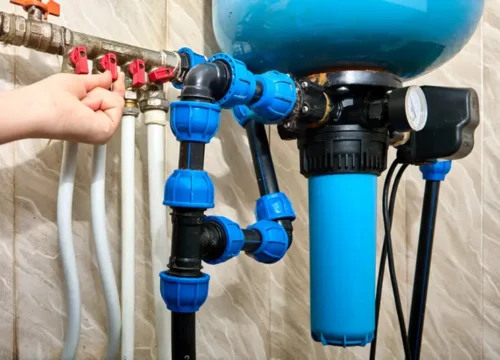
Whole-house filtration systems treat water as it enters the home, allowing treated water to reach showers, bathrooms, laundry areas, and other fixtures. This approach can be useful when the concern extends beyond a single drinking-water tap.
For example, someone dealing with sediment throughout the home may prefer a whole-house filter rather than repeatedly dealing with clogged faucet aerators. Similarly, households concerned about hard water may look into softening technology rather than relying on individual filters.
Don’t Forget About Air Quality
Water gets most of the attention, but indoor air deserves a little thought too. We spend a huge amount of time indoors, and dust, odors, allergens, and other particles can affect the comfort of a home.
When evaluating household environmental quality, looking at both water and air can provide a more complete picture. A professional complimentary water & air consultation may help homeowners understand potential concerns and identify practical options without immediately committing to expensive equipment.
The useful part of a consultation isn’t simply getting a sales pitch. It’s having someone explain what they’re seeing, what may actually matter, and which improvements are optional versus necessary.
Choose Technology Based on the Problem
A common mistake is choosing a system first and asking questions later. It’s better to work in the opposite direction.
If hard water is the issue, a softener may be appropriate. If sediment is the concern, a sediment filter could be more useful. Activated carbon can help with certain taste and odor problems, while reverse osmosis is commonly used when a household wants more extensive reduction of dissolved substances in drinking water.
In some homes, a combination of technologies makes sense. In others, adding multiple systems would simply be unnecessary.
More equipment doesn’t automatically mean better water.
Maintenance Is Part of the Equation
A water treatment system isn’t something you install and forget forever. Filters eventually need replacement, membranes require attention, and certain equipment benefits from professional servicing.
Before buying anything, ask about maintenance intervals and replacement costs. A system that looks affordable initially can become frustrating if replacement components are expensive or difficult to find.
It’s also worth asking how much water the system wastes, how much space it requires, and whether installation needs plumbing modifications.
These aren’t exciting questions, admittedly. But they can save you trouble later.
Making a Confident Decision
Improving household water quality doesn’t need to be intimidating. Start with the basics: understand your water source, identify the problems you’re actually experiencing, and test the water when necessary.
From there, compare treatment technologies based on their purpose rather than marketing promises. A good solution should address a real need, fit your household, and be manageable over the long term.
And perhaps the biggest lesson is this: don’t chase perfection when practical improvement is enough. Water treatment should make everyday life easier, not turn your utility room into a science laboratory.
When you know what’s in your water and why you’re treating it, choosing the right system becomes much simpler. And once that glass of water tastes fresh, clean, and just right, you’ll probably wonder why you waited so long to pay attention.