Finding the Right Balance Between Drinking Water and Whole-Home Water Treatment
Water is one of those things most people barely think about until something seems off. Maybe the tap water has a faint metallic taste. Perhaps the kettle develops white scale faster than it used to, or the shower leaves spots on the glass. Sometimes the issue is obvious. Other times, you simply have the feeling that your water could be better.
The good news is that improving household water quality doesn’t always require an elaborate setup. The right solution depends on what’s actually in your water, where you notice the problem, and what you want the treatment system to accomplish. For some homes, that means treating drinking water at a single faucet. For others, a broader approach makes more sense.
Start With the Water You Actually Have
Before choosing equipment, it’s worth understanding the water coming into your home. Water quality can vary considerably between communities, buildings, wells, and even neighborhoods. Municipal water may contain disinfectants and naturally occurring minerals, while private well water can have its own mix of sediment, hardness, iron, or other concerns.
A water test gives you something far more useful than guesswork. Instead of buying a system because a friend swears by it, you can identify the specific characteristics that need attention. That matters because different treatment technologies are designed for different jobs.
For example, a system designed to reduce dissolved solids isn’t necessarily the best answer for hard water. Likewise, a sediment filter isn’t intended to solve every taste or odor problem. Knowing the starting point makes the rest of the decision much easier.
When Point-of-Use Treatment Makes Sense
If your biggest concern is the water you drink and cook with, a treatment system installed at a specific faucet may be all you need. These systems focus on water used for consumption rather than treating every gallon entering the property.
Under-sink drinking water systems are particularly useful for households that want cleaner-tasting water without installing treatment equipment throughout the house. Because the system sits beneath the sink and feeds a dedicated faucet, it can provide a convenient source of treated water while leaving the rest of the plumbing untouched.
This approach can also be practical when your whole-house water is generally acceptable but you want an extra level of filtration for drinking. There’s less equipment to install, and maintenance is typically concentrated in one location.
Why Whole-Home Filtration Can Be Worth Considering
A point-of-use filter won’t do much for water flowing through your shower, washing machine, dishwasher, or bathroom faucets. If the concern extends beyond the kitchen, treating water at the point where it enters the home may be more appropriate.
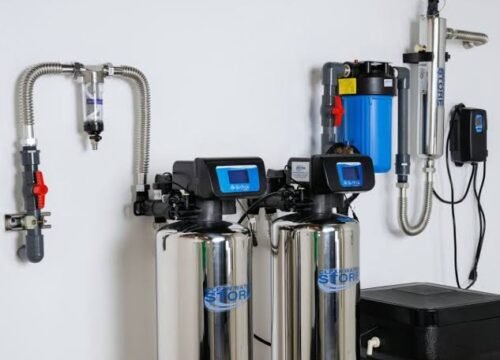
Whole-home filtration is designed to address water quality throughout the property. Depending on the equipment selected, it may help reduce sediment, chlorine, unpleasant odors, or other contaminants identified during testing.
There’s a practical benefit here that sometimes gets overlooked. Better water quality isn’t only about what goes into your glass. The water running through fixtures and appliances affects everyday living, too. Cleaner water can make showers more pleasant and may reduce some of the nuisance associated with sediment or certain water-quality problems.
Still, whole-home treatment shouldn’t be chosen simply because it sounds more comprehensive. More equipment isn’t automatically better. The system should match the actual water conditions and household needs.
Hard Water Is a Different Problem
Hard water deserves its own conversation because filtration and hardness treatment aren’t the same thing. Hard water contains elevated levels of minerals, primarily calcium and magnesium. While it isn’t usually considered a health concern at typical household concentrations, it can be a persistent nuisance.
You may notice mineral deposits around faucets, cloudy shower doors, scale inside appliances, or soap that doesn’t seem to rinse away properly. Over time, those deposits can become frustratingly difficult to remove.
That’s where water softening can play a useful role. A properly selected softener is intended to reduce the minerals responsible for hardness, helping protect plumbing fixtures and appliances while making everyday cleaning a little less of a chore.
The difference is important: a filter and a softener aren’t interchangeable. A filter generally targets particles or particular substances, while a softener addresses hardness minerals. In some homes, using both technologies makes sense because they’re solving two separate problems.
Don’t Forget About Taste and Odor
Taste is often the first reason homeowners start looking into water treatment. Water that smells strongly of chlorine, tastes metallic, or has an earthy character can make people reach for bottled water without even thinking about it.
Treatment can improve these issues, but the right technology depends on the cause. Activated carbon, for example, is commonly used to improve taste and odor associated with certain compounds. Other concerns may require different treatment methods.
This is another reason testing matters. A system shouldn’t be selected based only on what the water looks like. Some substances can’t be seen, smelled, or tasted at all. Good water treatment begins with information rather than assumptions.
Think About Maintenance Before Buying
Even a well-designed water treatment system needs attention. Filters eventually become loaded with the material they’re designed to capture. Other systems may require sanitizing, membrane replacement, salt, inspections, or periodic adjustments.
It’s easy to focus on the equipment price and forget about the years of maintenance that follow. That’s a mistake. A system that’s inexpensive to install but difficult to maintain may become a headache.
Ask practical questions before committing. How often do filters need changing? What does replacement cost? Can routine service be handled locally? What happens if the system develops a problem? And, perhaps most importantly, is there someone available who understands the equipment?
Those details may not sound exciting, but they matter after the installation crew has left.
Choose Treatment Based on Your Goals
There isn’t one perfect water treatment setup for every household. A family mainly concerned about drinking water may benefit from a compact under-sink solution. A home experiencing water-quality issues at multiple faucets may need broader filtration. Another property may need hardness treatment because mineral buildup is the real problem.
Sometimes, the ideal answer is a combination of technologies. That’s perfectly reasonable when each component has a clear purpose.
The goal isn’t to create the most complicated system possible. It’s to create a system that addresses the problems you actually have, fits your household, and can be maintained without becoming a burden.
Better Water Starts With a Better Decision
Good water treatment is less about chasing the latest equipment and more about understanding your home’s water. Test first. Identify the problem. Consider where treatment is needed, then choose technology that addresses that specific need.
That approach can save money, reduce unnecessary equipment, and make the final system much more useful.
After all, water treatment should quietly make life better. You shouldn’t have to think about it every morning. When the system is properly matched to the water and maintained over time, that’s exactly what it can do—sit in the background and simply let you enjoy better water, day after day.