Making Sense of Better Water: Choosing the Right Treatment for Your Home

There’s something easy to overlook about the water flowing through your home. You turn on the tap, fill a glass, make coffee, take a shower, and get on with the day. Water is simply there. But every home has its own water story, and sometimes the signs that something needs attention are surprisingly ordinary: a metallic taste, white spots on faucets, dry-feeling skin, a strange smell, or a kettle that seems to collect scale overnight.
These issues don’t necessarily mean your water is unsafe. They can, however, point toward minerals, sediment, odors, or other substances that affect how water looks, tastes, feels, or behaves. The trick is figuring out what’s actually in the water before choosing a treatment system. That’s where thoughtful water testing and the right equipment make a real difference.
Start With the Water, Not the Equipment
It’s tempting to begin by searching for the latest filtration system. Bigger seems better, and a long list of features can certainly look impressive. But water treatment isn’t a one-size-fits-all purchase.
A home with hard water has different needs from a property dealing with sediment or unpleasant odors. Someone primarily concerned about drinking and cooking water may need a different approach from a homeowner who wants better water throughout the entire house.
Testing the water first gives you a clearer starting point. It can identify concerns that aren’t obvious from taste or appearance alone and helps determine which treatment method makes sense. In other words, don’t buy the equipment first and ask questions later.
What Are Private Water Treatment Systems?
For households that want greater control over their water quality, private water treatment systems can provide a practical way to address specific concerns at the property level. These systems may include filtration, softening, reverse osmosis, or other technologies depending on the water source and treatment goals.
The important word here is “specific.” A system should be selected around the actual characteristics of the water, rather than based purely on marketing claims. If hard water is the main issue, for example, softening may be more relevant than a filtration system designed primarily for sediment. If drinking water has a particular taste or contains dissolved substances, a point-of-use treatment system might be appropriate.
Good water treatment starts with diagnosis. The equipment comes second.
Hard Water Is More Than an Annoyance
Hard water is one of those household problems people often tolerate for years. You notice the spots on the shower glass. Soap doesn’t seem to rinse quite right. Faucets develop a crusty buildup. Then there’s the plumbing, appliances, and water heater quietly dealing with the same mineral content.
Calcium and magnesium are naturally occurring minerals, and hard water isn’t automatically a health problem. Still, excessive mineral buildup can affect household maintenance and appliance performance over time.
A water softener can help reduce the minerals responsible for hardness. The right size and configuration depend on water usage, household size, and water chemistry. It’s not glamorous equipment, admittedly, but sometimes the unglamorous things are the ones doing the heavy lifting.
Why Kinetico Systems Get Attention
Homeowners researching water treatment will often come across kinetico water systems, particularly when looking for solutions designed around water efficiency and household needs. Kinetico is known for non-electric water treatment technology and systems that can be configured for different water-quality concerns.
That doesn’t mean every Kinetico system is automatically the right answer for every home. The more useful question is whether the equipment matches the water conditions, household demand, installation environment, and maintenance expectations.
A good installer should be willing to explain why a particular system is being recommended. If the explanation is simply “this is our best system,” that’s not much of an explanation at all.
Filtration and Softening Do Different Jobs
One common source of confusion is the assumption that a water softener and a filter do essentially the same thing. They don’t.
Filtration generally targets particular particles or substances depending on the filter media and system design. Sediment filters, carbon filters, specialty media, and other technologies each have different purposes.
Softening, meanwhile, is primarily aimed at reducing hardness minerals. So if your problem is mineral buildup, installing a filter designed for sediment may not solve it. Likewise, a softener isn’t necessarily intended to handle every contaminant or taste issue.
Understanding that distinction can save homeowners money and frustration.
When Whole-Home Filtration Makes Sense
If the goal is to improve water at multiple fixtures rather than only one drinking-water tap, whole-home water filtration may be worth considering. These systems treat water as it enters the property, allowing filtered water to reach showers, sinks, laundry areas, and other fixtures.
That can be particularly useful when sediment, chlorine taste or odor, or other treatable water-quality concerns affect the household broadly.
Still, whole-home treatment needs to be designed carefully. Flow rate matters. So does filter capacity. A system that performs beautifully under light demand may struggle if several showers, appliances, and faucets are operating at once.
Professional sizing isn’t just a technical detail; it can determine whether the system feels effortless or becomes another household headache.
Don’t Forget the Drinking Water
Even when overall household water is acceptable, many people want an extra level of treatment for drinking and cooking. Reverse osmosis systems are often considered for this purpose because they can reduce a wide range of dissolved substances.
These systems can be installed at a kitchen sink or integrated into a broader water-treatment strategy. The right choice depends on what’s present in the water and what the household actually wants to remove.
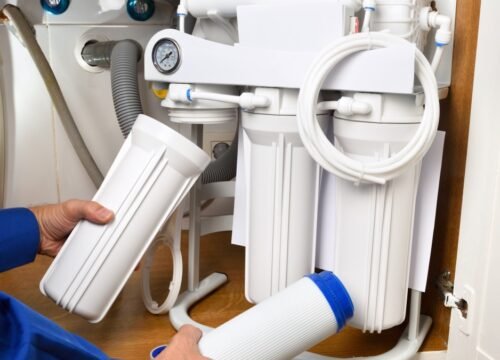
There’s also a practical side to consider. Filters need replacing, membranes require attention, and storage tanks or other components need occasional inspection. The best system isn’t simply the one that works on installation day. It’s the one you’re realistically willing to maintain.
Maintenance Is Part of the Purchase
Water treatment equipment isn’t completely “set it and forget it.” Filters eventually load up. Softener settings may need adjustment. Brine tanks need attention. Components can wear out.
Regular maintenance helps systems continue working as intended and can prevent small problems from becoming expensive repairs. It also provides an opportunity to check water quality again, particularly if the household’s water source or circumstances change.
Ask about maintenance before purchasing. Find out what needs replacing, how often it should happen, and whether professional service is available. Those details may sound boring when you’re comparing systems, but six months down the road, you’ll be glad you asked.
Choose Based on Real Household Needs
There’s no prize for owning the most complicated water treatment system on the street. What matters is getting the right treatment for your water and using equipment that fits your home.
Start with testing. Identify the actual concerns. Consider whether treatment is needed for drinking water, the entire house, or both. Then compare technologies, installation requirements, ongoing maintenance, and long-term operating costs.
And don’t overlook the people installing the equipment. A knowledgeable local professional can explain the results, recommend suitable options, and help you avoid paying for technology you simply don’t need.
Clean, pleasant water shouldn’t require constant thought. Ideally, once the right system is installed and maintained, you go back to doing what you were doing before—turning on the tap without wondering what’s coming out. That’s really the point of good water treatment: not making water complicated, but making everyday life a little easier.