A Practical Guide to Water Treatment and Water Softeners in Northeast Illinois
Water has a funny way of becoming noticeable only when something isn’t quite right. One day, your dishes look perfectly clean. The next, they have cloudy marks. Your showerhead develops a crusty coating, your skin feels unusually dry after a shower, or your morning coffee just doesn’t taste the same. None of these things necessarily means there’s a serious problem, but they can be signs that your home’s water deserves a closer look.
For homeowners, understanding water treatment doesn’t need to be complicated. There are several technologies available, and each one serves a different purpose. The trick is figuring out what your household actually needs instead of choosing equipment simply because it has a long list of features.
For residents considering water treatment & water softeners in northeast illinois, starting with the basics can make the entire process easier. Test the water, understand the results, and then choose a treatment approach that matches the problem.
Why Testing Should Come First
It’s tempting to jump straight into shopping for a water softener or filtration system. After all, there are plenty of products promising cleaner, softer, better-tasting water.
But buying first and asking questions later isn’t always the smartest route.
Water conditions differ from property to property. Even homes in the same neighborhood can have different plumbing systems, usage patterns, and treatment needs. A homeowner may be dealing primarily with hardness, while another may be more concerned about sediment, taste, odor, or a particular contaminant.
A free water test can provide a useful starting point. It helps identify characteristics of the water so you can make a more informed decision. There’s something reassuring about seeing actual information rather than trying to diagnose the problem from a few spots on a shower door.
Understanding Hard Water
Hard water is one of the most common reasons people begin researching water treatment. It contains minerals, particularly calcium and magnesium, that can create scale and other household frustrations.
You might notice white residue around faucets, mineral deposits on shower doors, or spots on dishes after they dry. Soap and shampoo may not lather the way you’d expect, either.
Then there are appliances. Coffee makers, dishwashers, water heaters, and other equipment that regularly use water can collect mineral deposits over time. Nobody wants to spend Saturday afternoon scraping scale from a fixture when there are better things to do.
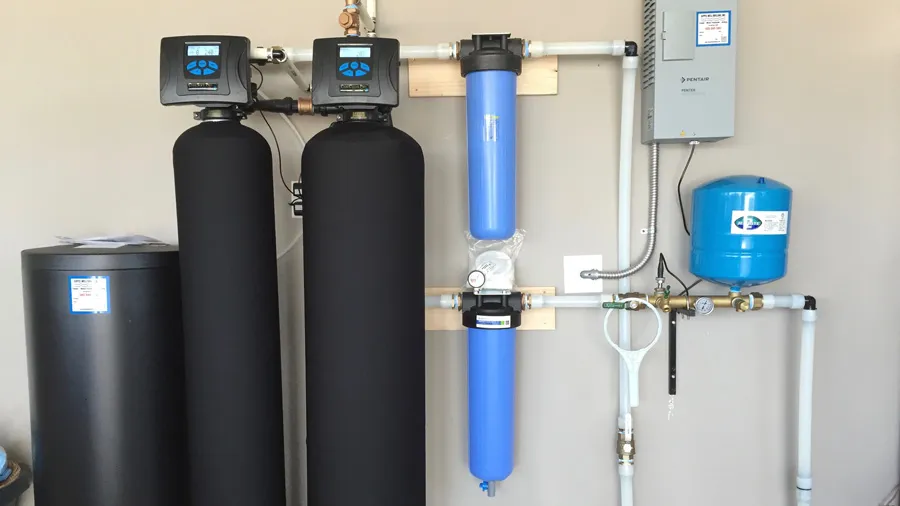
A water softener can help reduce hardness by using an ion-exchange process. In a typical salt-based system, hardness minerals are exchanged for sodium or potassium ions. The treated water can then move throughout the home, helping reduce the scale associated with hard water.
A Softener Isn’t a Universal Filter
This point gets overlooked quite often.
A water softener is primarily designed to deal with hardness. It isn’t automatically a solution for every possible water concern. Filtration systems, meanwhile, can be designed for different purposes depending on their technology and filter media.
For example, one filtration system might focus on improving taste and odor, while another is designed to reduce sediment or specific substances. Reverse osmosis systems are another option often used for drinking water when particular treatment goals call for it.
So, if you’re seeing mineral scale throughout your home, a softener may be worth considering. If your main complaint is the taste of drinking water, a point-of-use filtration system might make more sense.
Sometimes the answer is a combination. Sometimes it’s surprisingly simple.
Pay Attention to Household Clues
Your home can tell you quite a bit if you know what to look for.
Recurring white deposits are one obvious clue. Changes in water pressure, unusual smells, discoloration, or sediment can also deserve attention. You may notice that certain appliances need cleaning more frequently or that laundry doesn’t feel as soft as it once did.
Still, don’t assume every symptom has the same cause.
A strange taste might be related to the water itself, but it could also come from plumbing or an aging filter. A sudden change in appearance may deserve investigation rather than an immediate equipment purchase.
Testing helps separate assumptions from useful information.
Choosing the Right Capacity
Once you understand the water conditions, the next question is equipment size.
A system that’s too small may struggle to keep up with household demand. One that’s unnecessarily large can add cost without providing a meaningful benefit.
Consider the number of people in the household, typical daily water consumption, and how many water-using appliances operate regularly. Families with several bathrooms and frequent laundry loads naturally have different needs from a couple living in a smaller home.
Ask about regeneration cycles and operating requirements as well. A knowledgeable installer should be able to explain why a particular capacity is recommended instead of simply pointing to the most expensive model.
Installation Matters More Than It Seems
Even excellent equipment won’t perform properly if it’s installed poorly.
Placement matters because treatment systems need enough room for operation and maintenance. Plumbing connections should be secure, drainage requirements need to be considered, and settings must be adjusted to match the home’s water conditions.
This is one reason professional installation can be valuable. You aren’t just paying someone to connect pipes. You’re getting help with setup, sizing, and making sure the equipment works as intended.
It’s also worth thinking ahead. Leave enough accessible space around the equipment so future filter changes, inspections, or repairs aren’t unnecessarily difficult.
Maintenance Keeps Small Problems Small
Water treatment equipment needs routine attention, just like other major systems in your home.
Filters need to be replaced. Salt tanks need to be replenished. Components may need cleaning or inspection. Settings can occasionally require adjustment, particularly if household water use changes.
Ignoring maintenance may not cause an immediate failure, which is why it’s easy to put off. But performance can slowly decline. You might notice returning scale, weaker filtration, changes in taste, or reduced efficiency.
A little routine care can go a long way.
If something suddenly seems different, it’s better to investigate early rather than wait until the system stops working completely.
Think About Your Long-Term Goals
Homeowners sometimes focus heavily on the initial price of a treatment system. That’s understandable, but the purchase price is only one part of the picture.
Consider operating costs, maintenance, replacement filters, salt usage, expected service life, and installation. A system that costs slightly more upfront may be more convenient or economical over time, while an inexpensive option may become frustrating if replacement parts are difficult to find.
Think about what you actually want to accomplish, too. Is the goal to reduce scale? Improve drinking water? Protect appliances? Address an odor? Your answer should influence the equipment you choose.
Water Quality Is About the Whole Home
People often associate treatment with drinking water, but household water is used for much more.
Better water quality can affect showers, laundry, cooking, cleaning, and the performance of water-using appliances. That doesn’t mean every household needs an elaborate treatment setup. It simply means that water deserves to be considered as a whole-house resource.
Testing can help determine which improvements are realistic and worthwhile.
It’s also important to keep expectations grounded. Water treatment technology has specific capabilities. No system should be presented as a magical cure for every possible water issue.
A Thoughtful Approach Pays Off
The best water-treatment decision usually isn’t the fastest one.
Start by noticing what has changed around your home. Get the water tested. Learn what the results mean. Then compare treatment options based on your household’s actual needs, not just marketing claims.
For homeowners in Northeast Illinois, local experience can be especially useful when selecting and maintaining equipment. A professional who understands regional water concerns can help explain the options without making the process feel like a guessing game.
At the end of the day, good water treatment is about practicality. You want water that works well for your home, equipment that fits your needs, and a system you can realistically maintain.
That’s a much better goal than simply buying the biggest or most complicated system available. When you understand your water first, the right solution tends to become a lot clearer.