Making Better Water Choices for a Healthier Home
Water is one of those things most people don’t think about until something seems wrong. Maybe the coffee tastes slightly different. There’s a chalky film around the faucet. Soap doesn’t seem to rinse away properly, or the water suddenly has a strange smell after sitting in a glass.
None of these signs necessarily mean there is a serious problem, but they are worth paying attention to. The quality of water entering a home can affect taste, plumbing, appliances, cleaning, and everyday comfort. More importantly, different water problems call for different solutions. Buying a treatment system simply because a neighbor has one isn’t always the smartest move.
A better starting point is understanding what is actually in your water.
Start With the Water, Not the Equipment
It’s tempting to begin by shopping for filters. There are countertop pitchers, under-sink units, softening systems, reverse osmosis equipment and whole-house products, all promising cleaner or better-tasting water. The choices can get confusing quickly.
That’s why water testing should come before making a major treatment decision. A proper test can provide useful information about hardness, pH, iron, minerals, dissolved substances and other characteristics that may influence which treatment method makes sense.
Testing is especially useful for homeowners using private wells. Well water can vary considerably depending on local geology, the condition of the well and seasonal changes. Municipal water is treated before it reaches the home, but its characteristics can still vary by location and distribution system.
In simple terms, don’t treat a problem you haven’t identified.
Why Hard Water Gets So Much Attention
Hard water is extremely common, and while it isn’t automatically a health concern, it can be a persistent nuisance around the house. Hardness generally comes from dissolved calcium and magnesium. As water is heated or evaporates, those minerals can leave behind scale.
You may notice white deposits on showerheads, faucets or glass doors. Inside water heaters, coffee makers and other appliances, mineral buildup can gradually become more troublesome. Hard water can also make soaps and detergents less effective, which is why some people feel as though they are constantly using more product.
This is where water softeners can make a noticeable difference. A properly selected softener reduces the minerals responsible for hardness, helping limit scale and making water feel different during showers and cleaning.
Still, softening isn’t the same thing as filtering. A softener is designed primarily for hardness, not as a universal solution for every possible water-quality issue. That distinction matters.
Filtering the Water Throughout the House
Some homeowners only want better drinking water. Others want to improve the quality of water used for showers, laundry, cooking and cleaning as well.
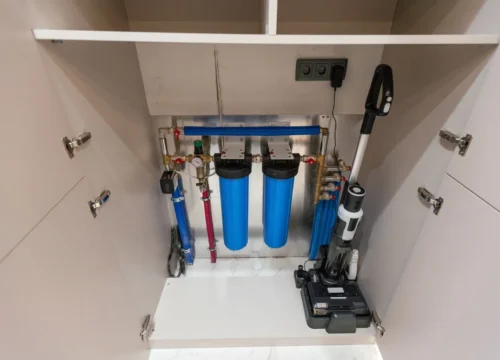
If the concern affects the entire household, a point-of-entry approach may be worth considering. Whole-home filtration treats water as it enters the property, rather than addressing just one faucet or appliance.
The right filtration setup depends heavily on the water itself. Sediment, chlorine, odors, iron and other unwanted substances may require different filtration media or combinations of technologies. There isn’t one magic filter that handles everything equally well.
That’s why professional assessment can be valuable. A system should match the problem, household water usage and available installation space. Oversized equipment can be unnecessarily expensive, while an undersized system may struggle to keep up with demand.
Don’t Forget About Sediment
Sediment is another issue that can quietly affect a home’s plumbing. Tiny particles may enter water from a private well, aging infrastructure or other sources. Even when the water looks clear in a glass, smaller particles can still be present.
A sediment filter can act as a first line of defense. Depending on the application, it may help protect downstream treatment equipment and plumbing components from unnecessary debris.
The important part is maintenance. Filters collect material by design, which means they eventually need to be cleaned or replaced. Ignoring a filter for too long can reduce water flow and make the system less effective. A little routine attention goes a long way.
Taste and Odor Tell Their Own Story
Water that smells like chlorine isn’t necessarily unsafe, but many people simply don’t enjoy drinking it. Other odors can point toward different issues, particularly with private well systems.
Taste and odor problems deserve investigation rather than guesswork. Activated carbon filtration, aeration, oxidation and other treatment approaches can be useful depending on what’s causing the issue.
And here’s the practical bit: if the water tastes unpleasant, people often drink less of it. Improving taste can make something as ordinary as filling a reusable bottle feel much more appealing.
Think About the Plumbing, Too
Water treatment isn’t only about what’s coming out of the drinking-water tap. The condition of the water can influence the entire plumbing system.
Scale can accumulate in pipes and fixtures. Certain dissolved minerals can create staining. Sediment can affect valves and equipment. Over time, these issues may contribute to reduced performance and more frequent maintenance.
This doesn’t mean every home needs an elaborate treatment setup. In fact, the opposite can be true. A straightforward system designed around a specific problem is often more useful than a complicated collection of equipment installed without a clear reason.
Maintenance Is Part of the Deal
Even a high-quality treatment system isn’t completely hands-off. Filters need replacement. Softeners may need salt or servicing. Some systems require periodic sanitation, inspections or adjustments.
Homeowners sometimes focus heavily on the initial purchase price and forget about the years that follow. A better comparison includes replacement filters, service requirements, electricity or water usage where applicable, and the expected lifespan of major components.
Ask questions before installation. How often does the system need maintenance? What happens if something stops working? Are replacement parts readily available? Who will service it?
Those details can matter more than a flashy feature list.
Choosing a Solution Without Overcomplicating Things
There is no universal definition of “good water.” A family concerned about hard water may need something completely different from a household dealing with sediment or an unpleasant odor.
Start with testing. Identify the actual problem. Consider how much water the household uses and which fixtures or appliances are affected. Then compare treatment options based on performance, maintenance and long-term value.
It’s also wise to think about future needs. A growing family, a remodeled kitchen or changes to a well system can alter water demand. The treatment setup should make sense not just today, but several years down the road.
Better Water Starts With Better Information
Water treatment doesn’t have to become a complicated home-improvement project. Often, the most sensible approach is surprisingly straightforward: find out what’s happening, understand what needs attention, and choose equipment designed for that particular situation.
Clean, comfortable water is something you notice most when you don’t have it. A little mineral buildup here, an odd taste there, and suddenly everyday chores become frustrating. The right treatment strategy can remove much of that hassle while helping protect the plumbing and appliances you rely on.
The key is resisting the urge to buy first and investigate later. Good water treatment begins with good information. Once you know what you’re dealing with, making the right choice becomes a whole lot easier.