Choosing the Right Water System for a Healthier, More Comfortable Home
Water is one of those things we rarely think about until something seems wrong. Maybe the tap water has an odd taste. Perhaps you notice white spots around the shower, scale inside the kettle, or dry-feeling skin after washing. Sometimes the problem is obvious; other times, the water looks perfectly clear but still contains minerals or contaminants you’d rather not have around.
That’s where choosing the right water treatment approach can make a real difference. The trick, though, is not simply buying the most expensive equipment you can find. Different systems solve different problems, and a good solution starts with understanding what’s actually in your water.
Start With the Water, Not the Equipment
It’s tempting to begin by comparing brands and specifications. But that’s putting the cart before the horse.
A better first step is water testing. A basic test can reveal things such as hardness, iron, pH, dissolved solids, chlorine and other characteristics that influence which treatment method makes sense. Without that information, you could end up paying for a system that addresses a problem you don’t really have.
For example, hard water may be responsible for scale and soap that refuses to lather properly. A drinking-water concern, on the other hand, may call for a different type of filtration. These are separate issues, even though they both come from the same tap.
Think About What You Want to Treat
Not every household needs the same level of treatment. Some people mainly want better-tasting drinking water. Others are tired of mineral deposits throughout the house. And some homeowners want broader protection for bathing, cooking, laundry and cleaning.
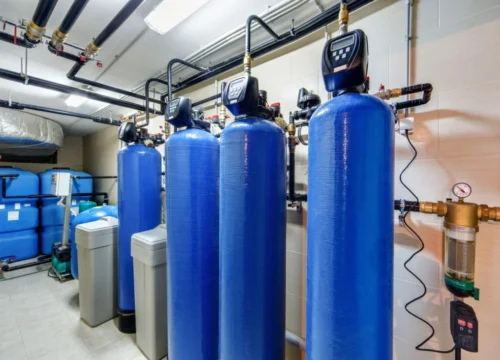
This is where whole-home water systems can be useful. Rather than treating water at just one faucet, a whole-home approach can address selected water-quality concerns as water enters the property. Depending on the system, it may help reduce sediment, chlorine, odors, hardness-related issues or other unwanted substances.
That doesn’t mean every whole-house system removes everything. Quite the opposite. The equipment needs to be matched to the specific water chemistry and treatment goals.
Hard Water Is More Than an Annoyance
Hard water is usually associated with calcium and magnesium. These minerals aren’t necessarily something people notice immediately when drinking water, but they can create plenty of household headaches.
You may see cloudy glassware, crusty faucets, mineral buildup around fixtures and reduced efficiency in water-using appliances. Soap can also react differently in hard water, leaving residue behind. Over time, that buildup can become stubborn.
For households dealing primarily with hardness, water softeners are often considered because they are designed specifically to reduce hardness minerals. The result can be noticeably different water behavior throughout the home.
Still, a softener isn’t a universal filter. It doesn’t automatically solve every taste, odor or contaminant concern. That’s an important distinction when you’re planning a treatment setup.
Drinking Water Deserves Its Own Conversation
The water coming from your kitchen faucet has a different job from the water used to flush a toilet or wash a driveway. For that reason, some homeowners prefer to focus additional treatment at the point where drinking and cooking water are used.
Reverse osmosis drinking water systems are one option for this kind of targeted treatment. Reverse osmosis uses a semipermeable membrane to separate water from many dissolved substances. Depending on the configuration and membrane, these systems can reduce a broad range of dissolved contaminants.
They can be especially appealing to people who want highly treated water at a kitchen faucet without necessarily treating every gallon entering the home. There are trade-offs, of course, including filter changes, membrane maintenance and water usage. The right setup depends on what you’re trying to accomplish.
Don’t Ignore Sediment
Sometimes the simplest problem gets overlooked.
If your water contains sand, rust particles or other suspended material, sediment filtration may be worth considering. Sediment can affect fixtures and appliances, clog cartridges and make downstream treatment equipment work harder.
A sediment filter can act as a first line of defense, depending on the water source and system design. For homes using well water, this can be particularly relevant, although municipal water supplies can also have sediment-related concerns.
The key is understanding particle size and concentration. A basic filter isn’t necessarily the answer to every sediment problem.
Consider the Whole Household
A water system shouldn’t be selected in isolation. Think about how many people live in the house, how much water you use, and when demand is highest.
A system that’s perfectly adequate for two people may struggle in a busy household with several showers, laundry loads and appliances operating around the same time. Flow rate and system capacity matter more than many homeowners realize.
It’s also worth considering where equipment will be installed. You need adequate space, drainage when required, electrical access for certain equipment and room for future filter changes or servicing. A beautifully designed system that is impossible to access later isn’t such a beautiful idea after all.
Maintenance Is Part of the Deal
Water treatment equipment isn’t something you install and forget forever.
Filters eventually become saturated. Softener components need attention. Reverse osmosis membranes have a service life. Connections should be checked, and systems may occasionally need cleaning or sanitization.
Skipping maintenance can reduce performance and, in some cases, create new water-quality concerns. A simple service schedule can prevent that. Keep track of filter replacement dates, pay attention to changes in taste or pressure, and don’t ignore unusual noises or leaks.
It sounds basic, but these little habits save trouble later.
Be Careful With One-Size-Fits-All Claims
Water treatment has become a crowded market, and homeowners will encounter plenty of bold promises. Some systems are marketed as if one piece of equipment can solve every imaginable water problem.
Real water chemistry is more complicated than that.
A good treatment plan should explain what the equipment is designed to remove, what it doesn’t remove, how often it needs maintenance and what ongoing costs to expect. If someone can’t answer those questions clearly, take a step back.
You don’t need the biggest system. You need the appropriate one.
A Smarter Investment Starts With Good Information
The best water treatment decision is usually less dramatic than people expect. It begins with testing, continues with identifying your priorities, and ends with choosing equipment that fits both the water and the household.
Maybe you need hardness reduction throughout the property. Maybe drinking water is your main concern. Perhaps sediment and odor are the real issues. In many homes, a combination of technologies makes more sense than relying on one device to do everything.
Clean, pleasant water shouldn’t feel like a complicated engineering project. But it is worth giving the decision a little thought before signing a contract or installing equipment.
After all, you and your family use water every single day. A system chosen around your actual needs can make the difference between simply treating water and genuinely improving the way your home feels, functions and runs.