Making Smarter Choices About the Water in Your Home
Most people don’t spend much time thinking about their household water. You turn on the tap, fill a glass, take a shower, wash the dishes, and get on with the day. Water is supposed to be simple.
Then something changes.
Maybe the water tastes a little odd. Perhaps there is a musty smell when you first turn on the faucet, or white spots start appearing on your shower glass. Sometimes the signs are even less obvious, such as appliances developing buildup or soap refusing to lather properly. These little annoyances can be easy to dismiss, but they may be telling you something useful about your home’s water.
The trick is knowing what actually needs fixing before spending money on treatment equipment.
Start With Information, Not Equipment
It can be tempting to search for a water filter immediately. There are countless systems available, and many promise cleaner, fresher, better-tasting water. But buying first and asking questions later isn’t always the best approach.
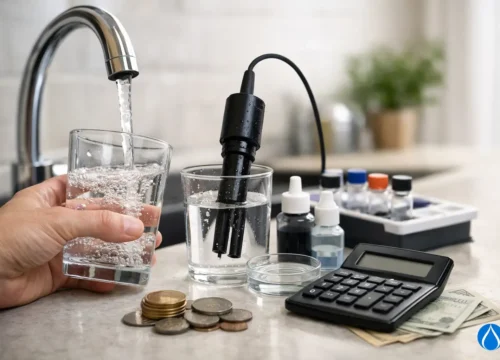
A better starting point is water testing & lab analysis. Testing provides a clearer picture of what’s actually present in your water. Depending on the source and the reason for testing, analysis may examine factors such as hardness, pH, minerals, metals, sediment, bacteria, or other contaminants.
This matters because water that looks perfectly clear isn’t necessarily identical to water that’s been properly assessed. On the other hand, an unpleasant taste doesn’t automatically mean the water is unsafe. Testing helps separate assumptions from facts.
For homeowners using private wells, regular testing can be especially valuable because well conditions can change over time. Even municipal water users may want testing when they notice a sudden change in taste, smell, appearance, or household plumbing performance.
Hard Water Has a Way of Making Itself Known
One of the most common water-quality complaints is hardness. Hard water contains higher levels of minerals, particularly calcium and magnesium. It isn’t necessarily dangerous, but it can certainly be inconvenient.
You might notice cloudy spots on glassware, crusty deposits around faucets, or scale inside appliances that use water. Showerheads can become restricted, and soap may leave behind more residue than you’d expect.
Over time, those little problems add up.
For households dealing with significant hardness, water softeners can help reduce the minerals responsible for scale. By treating the water before it moves through the home’s plumbing, a properly sized system can help protect fixtures and water-using appliances while making cleaning a bit easier.
Still, softening isn’t a cure-all. If the concern is sediment, odor, chlorine taste, or a particular contaminant, another form of treatment may be more appropriate. The best solution depends on the actual water chemistry.
Filtration Should Match the Problem
The word “filter” sounds straightforward, but water filtration isn’t one single technology. Different filters are designed to handle different things.
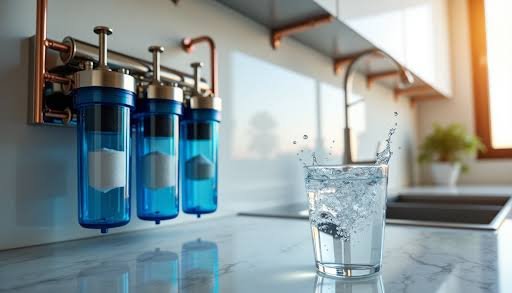
Sediment filters can capture particles and suspended material. Activated carbon filtration is commonly used for improving taste and reducing certain odors and compounds. More specialized systems can target particular contaminants, while reverse osmosis can provide a different level of treatment for drinking water.
That’s why filters & home filtration should be selected based on the water conditions rather than simply choosing the most expensive system available.
For some homes, a point-of-use filter at the kitchen sink may be enough. Other households may benefit from whole-home filtration, particularly when the concern affects showers, laundry, appliances, and other water outlets throughout the property.
There isn’t much value in treating water that doesn’t need treatment. Good planning keeps the system practical.
Whole-Home Treatment Can Change the Everyday Experience
When water problems affect more than the kitchen, treating just one faucet may not solve the bigger issue.
Think about everything connected to your plumbing. Your washing machine, dishwasher, water heater, bathroom fixtures, outdoor taps, and showers all depend on the same incoming water. If the problem is widespread, whole-home treatment may be worth considering.
But bigger isn’t automatically better.
A whole-house system needs enough capacity for the property’s flow rate and household demand. Installation space, plumbing configuration, maintenance requirements, and future service costs also deserve attention.
A family of two with modest water use has different needs from a busy household with several bathrooms and heavy daily consumption. Choosing equipment without considering those details can lead to poor performance or unnecessary expense.
Don’t Forget About Water Pressure
Water treatment systems can affect flow, particularly when filters become clogged or equipment isn’t sized correctly. If your home already has low water pressure, that’s something to discuss before installing a treatment system.
A filter that works well when new may create more resistance as it collects sediment. Routine replacement becomes important.
It’s also worth paying attention to sudden changes. If pressure drops noticeably after a system has been operating normally for months, the issue might be a clogged filter, a valve problem, or something unrelated to the treatment equipment altogether.
A little troubleshooting can prevent a small problem from becoming an expensive one.
Maintenance Is Part of the Deal
Installing a treatment system isn’t the finish line. It’s more like buying a car: useful, convenient, but still something that needs care.
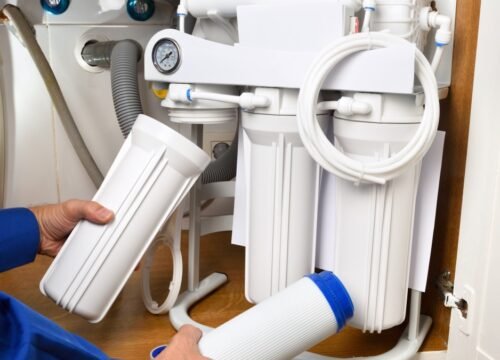
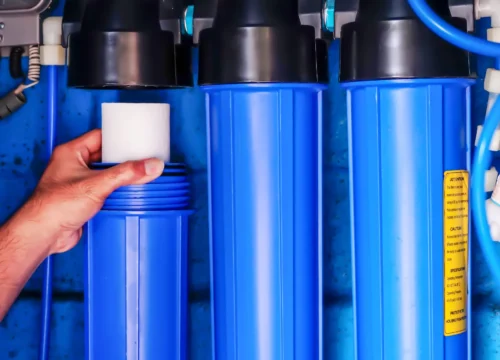
Filters need replacement. Softening equipment may require replenishment and periodic checks. Tanks, valves, fittings, and control components can eventually need attention. Ignoring maintenance may gradually reduce the system’s effectiveness.
Keep a simple record of service dates and filter changes. It doesn’t have to be complicated. A note on your phone is enough.
If the water begins tasting different, develops an unusual smell, or starts leaving more residue, don’t automatically assume the treatment equipment is working as it should. Sometimes the answer is as simple as a filter that’s overdue for replacement.
Consider the Long-Term Cost
Price is important, but the purchase price tells only part of the story.
A less expensive system may require frequent filter changes. Another system might cost more initially but have lower ongoing maintenance. Installation complexity can also affect the overall investment.
Before making a decision, ask what replacement parts cost, how often maintenance is needed, how much water the system can handle, and whether professional servicing is available when something goes wrong.
The cheapest option on day one isn’t always the cheapest option five years later.
Good Water Treatment Starts With a Good Diagnosis
There’s a certain satisfaction in fixing a water problem properly. The shower glass stays cleaner. The strange taste disappears. Faucets don’t develop that stubborn crust quite as quickly. Maybe the coffee even tastes better in the morning.
But those improvements usually come from matching the solution to the problem—not from buying every piece of treatment equipment available.
Start by understanding your water. Test when appropriate. Think about the needs of everyone in the household. Then choose treatment based on evidence, capacity, maintenance, and long-term value.
Water is easy to take for granted because it is always there. Yet it’s part of nearly every routine we have at home. Giving its quality a little more attention can make the whole house feel cleaner, easier to manage, and simply more comfortable.
And really, that’s what good water treatment should accomplish: not complexity, but peace of mind.